
to Reason
Over Trillions of Raw Events
KeewanoDB turns raw events into complete, ordered context agents can query directly, compare across populations, and use at machine scale.
The Event Record Shaped for Agents
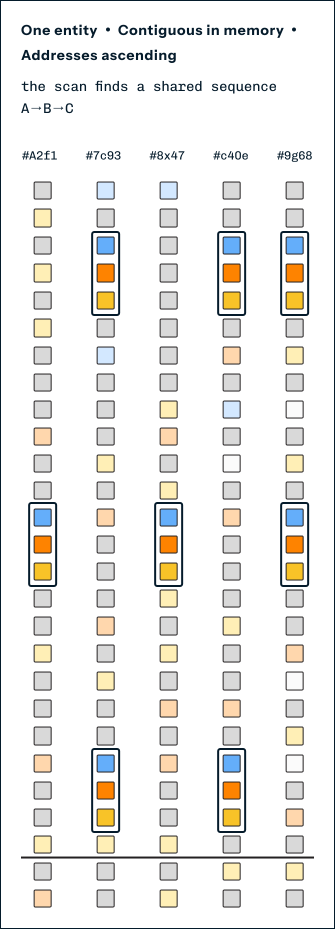
KeewanoDB stores each entity’s complete event sequence together, in order, and directly queryable. Built for massive event workloads and machine-scale query volume, it delivers faster, lower-cost answers grounded in the full record.


Nothing To Replace. Nothing To Rebuild.
Use KeewanoDB on its own or alongside the stack you have today. Events arrive straight from your app via SDK, or from the systems you already run. It auto-scales to thousands of agents querying at once.


Ingest raw events from
your existing stack
KeewanoDB
one database • your raw events, agent-ready
Keep every event intact.
Complete record. No sampling. No reduction.
Tie events to entities, timelines, and outcomes. Build the full story around each event.
Map raw events to concepts, patterns, and definitions. Meaning that agents can query, not just fields.
Run reports, similarity, and custom logic in-database. SIMD & GPU acceleration for low latency at scale.
Return answers through the tools you already use. MCP, SQL, REST, APIs, and analytics tools.
Grounded context delivered
through the interfaces
you already use
What the Engine Makes Possible
Query Raw Event Data Freely
KeewanoDB lets humans and agents ask new questions over raw event data at machine scale, with millisecond-speed answers. No prebuilt pipelines, rollups, or pre-aggregated views required.
Ingest Without Schema Rebuilds
Append new event types as they appear, without schema changes, index rebuilds, or pipeline updates.
Query Through a Built-In Semantic Layer
KeewanoDB adds meaning on top of event records, so agents can query by concepts, definitions, and business logic, not only raw event names or fields.
Connect Through Standard Interfaces
Use MCP, REST, SQL, and standard interfaces on top of a next-generation event reasoning engine.
In-Database Compute
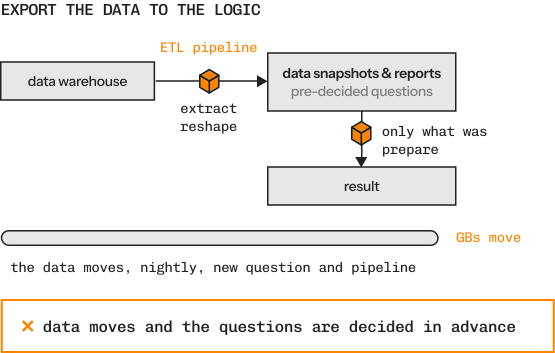
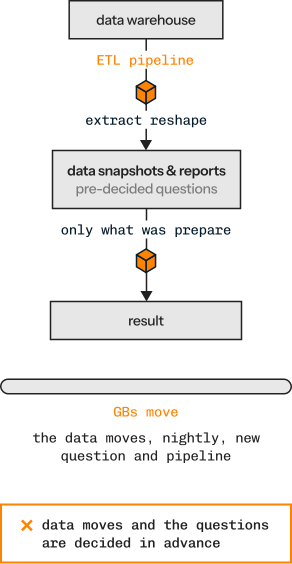
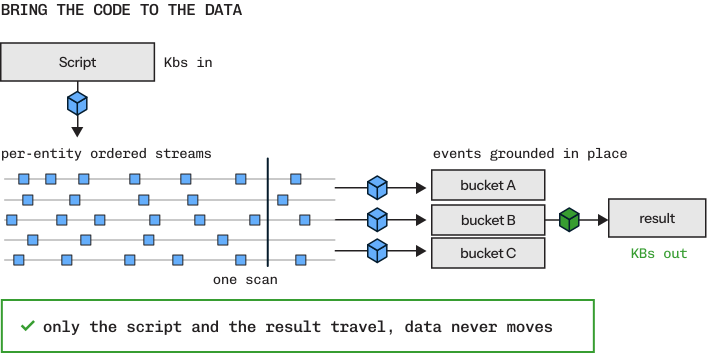
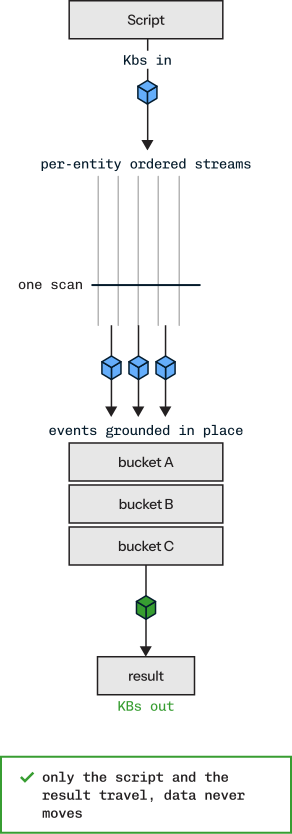
An agent sends a script of steps. It runs in-process, beside the complete record with no round-trip. Sandboxed script, strict time and memory limits.


Return Context Agents Can Use
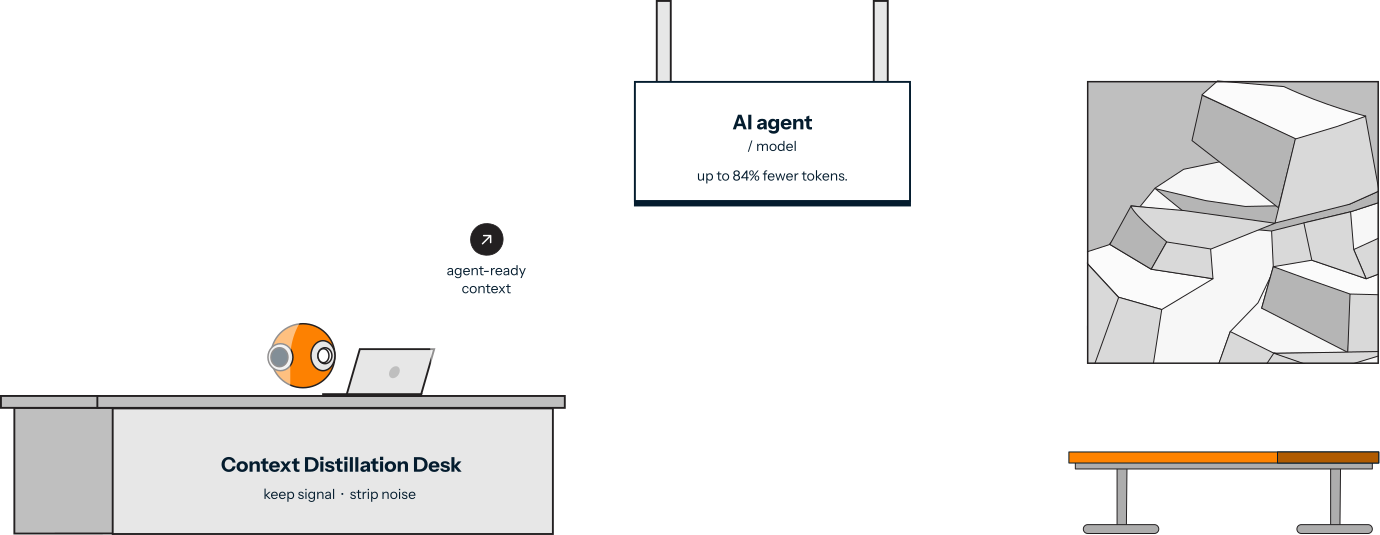
KeewanoDB keeps the complete record underneath, then returns dense, relevant context for the question, model, or application, using up to 84% fewer tokens.

Questions That Normally Require Rebuilding the Record
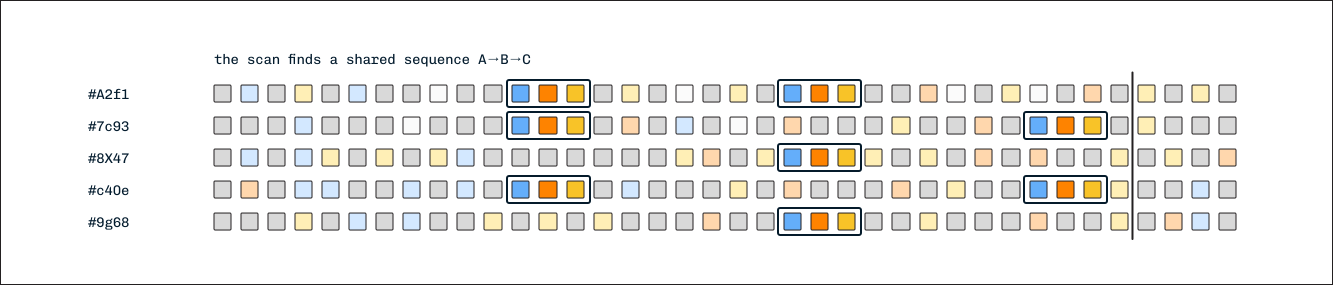
When a question depends on the order of events, KeewanoDB can read the record directly and compare it across the full population.

Find Similar Paths Across the Full Population
Start with a churned customer, a high-value user, a suspicious transaction, a failed device, or a broken agent run. KeewanoDB compares that sequence across the dataset and ranks the closest matches.
The similarity comes from your own event data and runs inside the database without a separate machine-learning pipeline.
Preserve the Full Record
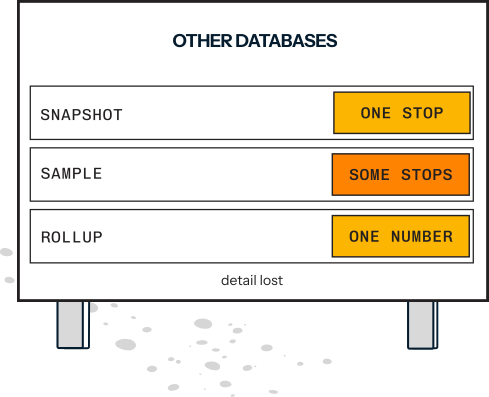
The complete record stays intact, not reduced to snapshots, samples, rollups, or disconnected rows.

Build on KeewanoDB
Ask new questions, compare patterns across millions of entities, and give AI grounded context from what actually happened.